Name Games in the Spider Room: Why a Brachypelma Label Still Matters in 2026
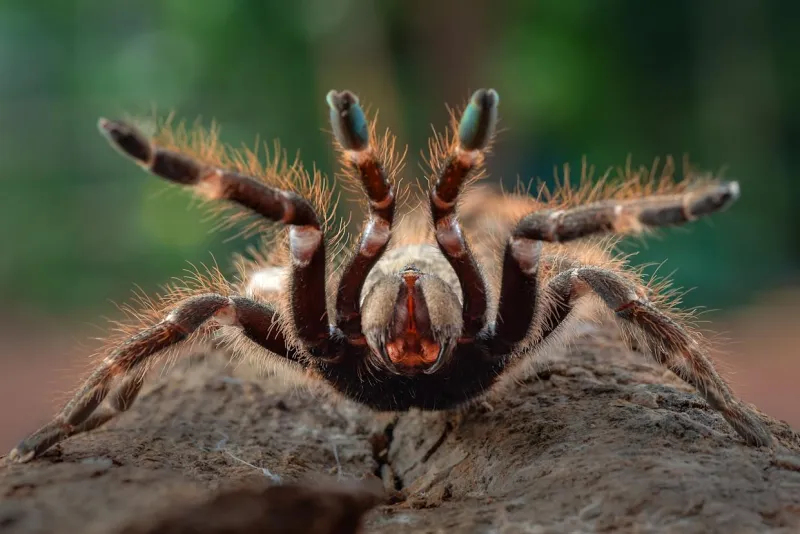
Photo: D. Sherwood, CC BY 4.0, via Wikimedia Commons
UK tarantula classifieds remain a curious mix of precision and folklore. A seller may advertise a sexed female with exact moult dates, then label the same animal with a genus that has been out of date for six years. For keepers of Brachypelma and its close relatives, the result is not merely untidy nomenclature. It is a consumer-protection issue, a record-keeping problem and, at times, a welfare risk.
The revision at the centre of this is the 2020 phylogenetic work that split the old, broad Brachypelma concept. Several well-known species, including the curly hair and the Mexican red rump, were moved to Tliltocatl. A small number of other recombinations followed, but Tliltocatl is the change most UK keepers meet. The genus Brachypelma was retained for species such as B. hamorii and B. smithi, whose own naming history is already vexed. None of this is controversial among taxonomists. It is, however, poorly reflected in the UK trade.
Why the change matters at the till
An outdated label is not automatically a dishonest label. Stock lists are copied, forum signatures age, and common names travel further than binomials. But when a buyer pays a premium for a named species, the label is part of the product. If the name is stale, the buyer cannot easily tell whether the animal is the species advertised, a close relative, or a hybrid with a convenient trade name.
Names also carry records. Breeding groups, CITES paperwork and studbooks depend on stable identification. A certificate that carries an older genus may still be genuine, but it needs to be reconciled with the current name rather than waved through. Keepers should ask the seller to explain the discrepancy, not simply accept it.
The common failure points in UK listings
Four patterns recur. First, the old binomial is presented as current: Brachypelma albopilosum rather than Tliltocatl albopilosus. Second, the common name is used without any binomial at all, so Mexican red rump may refer to more than one animal in the hobby. Third, the label includes a subspecies or locality that the seller cannot document. Fourth, the seller uses Brachypelma as a catch-all for any black-and-red tarantula, which is precisely the habit the revision was meant to correct.
Online marketplaces and social-media sales pages are the least consistent. Expo cards are often better, but they can still be printed from old stock. Serious breeders have largely updated their lists; general retailers and casual sellers are more variable.
What can go wrong for the buyer
The immediate risk is paying for a name rather than an animal. A premium price attached to an outdated or ambiguous label is difficult to justify. The second risk is hybrid stock. If the seller cannot state the provenance of both parents, a label that combines an old genus with a popular common name should be treated with caution. The third risk is care drift: Tliltocatl and Brachypelma are not identical in every husbandry detail, and keepers who rely on a generic care sheet may miss subtle differences in humidity, ventilation and growth rate. The fourth risk is paperwork. Protected status and record-keeping are not improved by a label that nobody can trace.
A verification checklist before purchase
Before money changes hands, ask for the following in writing:
- The current binomial, with author and year if available.
- The common name mapped to that binomial, not the other way round.
- The seller's source and whether the animal is captive-bred in the UK or imported.
- Clear photographs of the specimen, including carapace, abdomen and legs.
- A statement of whether the label reflects the 2020 revision and, if not, why not.
- Any CITES or provenance paperwork, with old and new names reconciled.
- A written invoice that records both the current name and any former name used in the listing.
- For breeding stock, the provenance of both parents and a clear statement on hybridisation.
A seller who cannot answer these points is not necessarily fraudulent. But a seller who refuses to discuss them is not offering a product that a careful keeper can verify. The World Spider Catalog is the practical reference point; the British Tarantula Society and other keeper organisations are useful for sanity-checking unusual names.
What better labelling would look like
The UK trade does not need a new bureaucracy. It needs a simple convention. Every listing should show the current binomial, the common name and, during the transition, the former name in brackets. It should state captive-bred status, provenance and date. Expo organisers could make that a condition of table space; online marketplaces could add it to listing templates; retailers could update stock systems rather than reprinting old labels. Breeders should keep studbook-style records that retain former names as synonyms, not as current identities.
Taxonomy is sometimes treated as an argument for specialists. In practice, a label is a basic piece of consumer information. For Brachypelmas, the position is straightforward: buy the animal, not the nostalgia. Ask for the current name, check it, and reward the sellers who make verification easy.