Living-Room Latitude: Matching Brachypelma Species to the Microclimates of a British Home
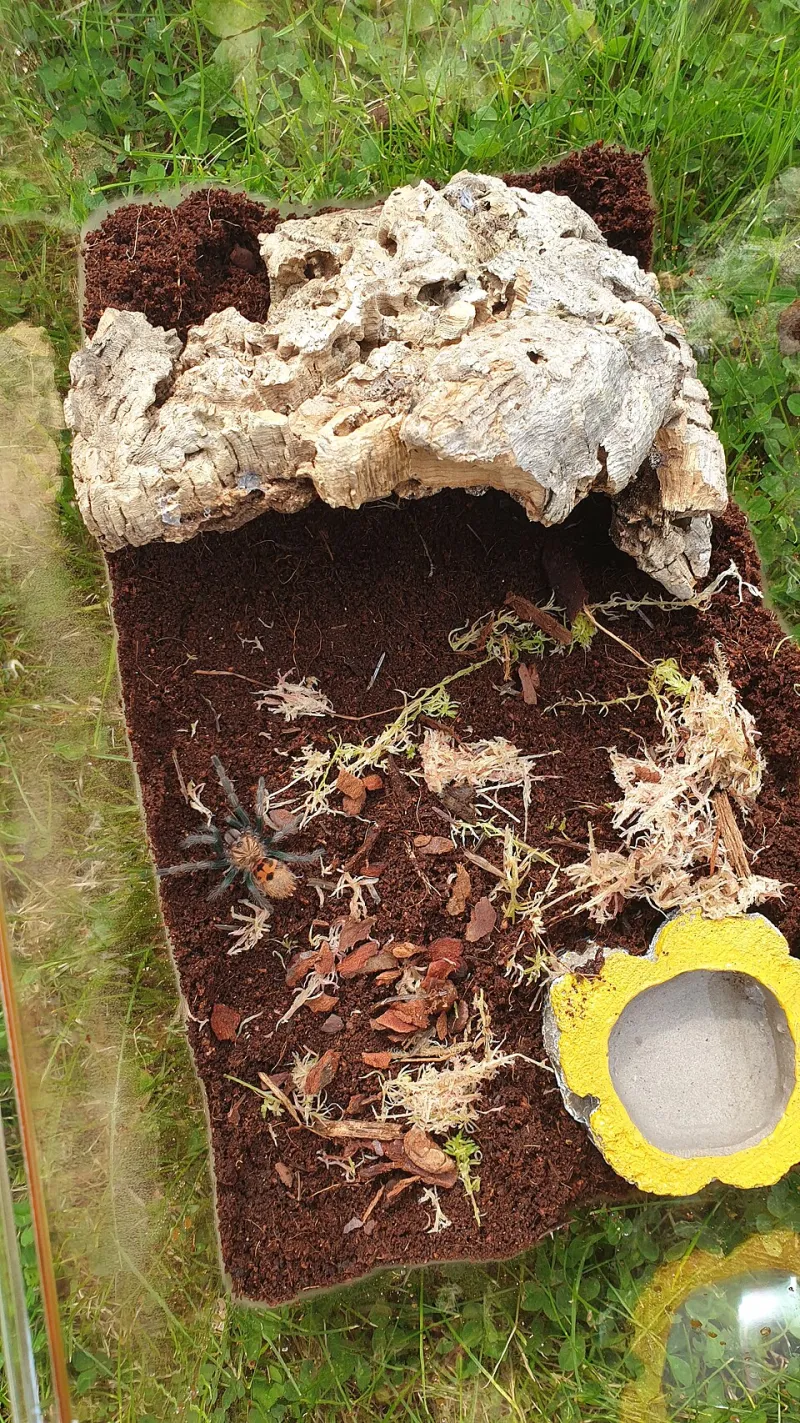
Photo: Singularities421, CC BY-SA 4.0, via Wikimedia Commons
For much of the year, a flat in Leeds, Cardiff or Croydon sits somewhere between 18 and 21°C in the rooms people actually use, with the thermostat pushing that figure up for a few hours each evening and letting it fall again overnight. Hobby literature, a good deal of it written for North American basements or continental European collections, tends to assume something rather different: a dedicated room held at a constant 25°C, with a controller on the wall and shelves built around it. That assumption has been imported into British keeping advice with too little scrutiny. It persuades newcomers that they need equipment before they need understanding, and it hides the more useful question, which is not how to heat a room but which species belongs in the room you already have.
The heated room is a minority solution
A heat source is not automatically a welfare improvement. It is a variable, and variables fail. A mat under a tub delivers warmth from below, which for a burrowing brachypelmid is warmth applied precisely where the animal instinctively retreats when conditions deteriorate. The spider cannot escape downwards from a floor that is itself the heat source, so it either stays in the warm zone and desiccates or presses against cooler glass and stalls. Neither outcome is what the keeper intended.
The alternative is to select the animal for the environment. Most species in Brachypelma, and the closely related Tliltocatl that were formerly placed in the genus, are tolerant of an overnight dip to 18°C provided the fall is gradual and the enclosure dries out sensibly between waterings. What they tolerate poorly is a warm, damp, still box held at a constant high temperature, which is the usual result of enthusiastic heating applied to a nervous beginner's setup.
Reading a British home as a set of microclimates
A home is not one climate. It is five or six, and they differ by three or four degrees in ways that matter.
An occupied living room is the warmest and the most variable: 19 to 22°C in the evening, cooler by morning, drier than any other room because of the heating. A north-facing spare bedroom is the most stable place in most houses, holding 17 to 20°C with almost no diurnal swing, which suits animals that grow slowly and dislike surprises. A hallway shelf is stable in temperature but noisy, and a slammed front door is a vibration event. An airing cupboard is the opposite problem: warm, constant, and without the night drop that gives an animal a metabolic rhythm. A kitchen windowsill combines solar gain, cooking humidity and human traffic, and should be ruled out on all three counts.
A working decision matrix
| Position | Typical winter range | Species that sit comfortably | Watch for |
|---|---|---|---|
| Living room, heated in the evening | 19–22°C day, 17–19°C night | B. hamorii, T. albopilosus, B. emilia | Radiator proximity; very dry air |
| North-facing spare bedroom | 17–20°C, very stable | T. albopilosus, B. emilia, T. vagans | Slower growth; condensation on cool glass |
| Hallway shelf | 17–20°C, draughty | T. albopilosus | Draughts, door vibration |
| Airing cupboard | 22–26°C, constant | B. boehmei, B. auratum, with care | No night drop; rapid drying |
| Kitchen windowsill | Wide swings, direct sun | Not advised | Solar gain, cooking humidity |
| Shelved unit with thermostat | 23–26°C | Most species, if managed | Running cost, failure modes |
Species notes
Brachypelma hamorii
The default species for good reason. Long-lived, slow-growing, and widely bred in the UK, it manages ordinary room temperatures without complaint and is forgiving of a dry week. It does not need supplementary heat in a room that is kept at 20°C or above. What it does need is depth of substrate and the option to burrow.
Tliltocatl albopilosus
The most thermally forgiving animal in this group, and the one that best suits a cool spare room. Many keepers report steady growth at 19 to 21°C with a modest night drop. It is also the species most often mis-sold as a beginner's bargain, which is a separate matter discussed below.
Brachypelma emilia
Modest, calm and well suited to a stable cool room. Slightly more sensitive to prolonged dryness than hamorii, so a full water dish matters more than any heater.
Brachypelma boehmei and B. auratum
Both appreciate warmth and both are frequently kept too damp. If your only available position is a cool north-facing room, these are not the animals to choose; if you have a reliably warm shelf, they are excellent, but the substrate should be allowed to dry between waterings.
Brachypelma klaasi
Scarcer in the trade, slower to establish and generally less tolerant of guesswork. Its relative rarity is not a reason to give it the more difficult position in the house.
Tliltocatl vagans
Hardy and adaptable, comfortable in a cool room, and tolerant of slightly damper substrate than the Brachypelma species. A sound choice where the room runs cool and the keeper tends to overwater.
Where a common species is the better choice
A keeper with a north-facing spare bedroom and no intention of installing heat is not making a compromise by choosing T. albopilosus over B. klaasi. They are making a match. The uncommon animal placed in unsuitable conditions does not become a better-kept animal because it was hard to obtain, and the welfare outcome is what the site exists to record. Rarity is a matter for the trade; suitability is a matter for the enclosure.
Testing before you commit
Before buying anything, place a minimum-maximum thermometer where the enclosure will actually stand and leave it for a fortnight in the coldest month you intend to keep the animal through. Record the low as well as the high. A single cold night at 14°C in a hallway is more informative than a month of averages, and it may redirect the whole plan towards a warmer shelf or a hardier species. It costs the price of a thermometer, which is less than a heat mat and considerably less than the wrong spider.