A New Arrival, a Separate Shelf: Quarantine Practice for Brachypelma Keepers
Isolation as ordinary husbandry
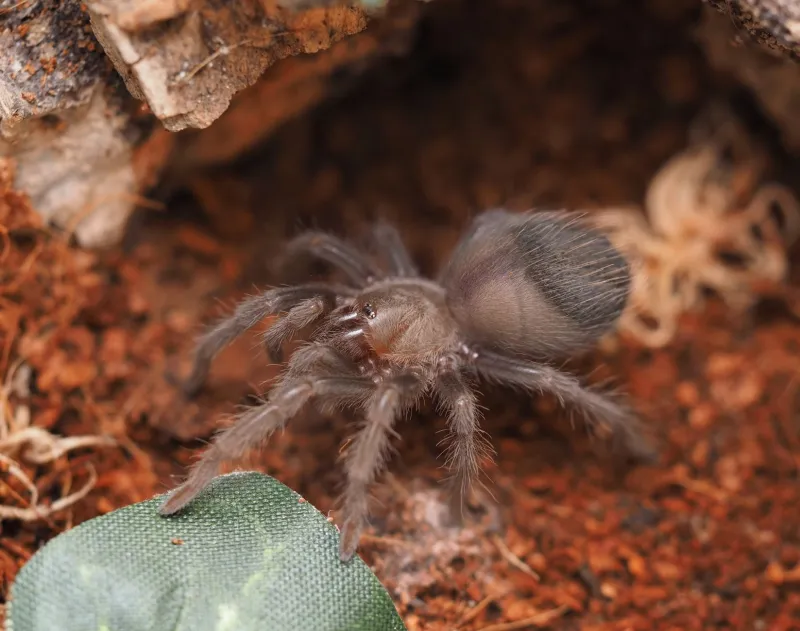
A new tarantula is rarely just one new tarantula. It is a new set of unknowns: a different breeder, a different substrate, a different journey, and a different microbial and invertebrate load. For UK keepers buying at expos, from specialist shops, or through posted deliveries, the risk is not exotic or theoretical. It is the ordinary consequence of moving living animals between collections.
Quarantine is often discussed as though it were a response to a suspected problem. In practice, it is better understood as a routine courtesy to the collection already in your care. A fortnight of separation gives the keeper time to observe, to record, and to make a dispassionate decision. It also protects years of careful husbandry from a single careless introduction.
The aim is not to treat the new spider as dangerous. It is to treat uncertainty with respect.
Preparing a quarantine station
The practical work begins before the spider arrives. A quarantine space need not be elaborate, but it should be genuinely separate in day-to-day use. A spare room, a closed cupboard, or a clearly divided section of a shelf can all work, provided tools and hands do not move freely between the new animal and the established collection.
Use a dedicated set of tools: forceps, a water dish brush, a soft paintbrush for moving spiders, a small scoop, and a spare catch cup. These should not return to the main shelf until the quarantine period has ended and the equipment has been cleaned. A simple plastic box with a lid is enough to keep them apart. Label it. The label is not bureaucracy; it is a prompt for the household.
Place the quarantine enclosure on a surface that is easy to clean and away from draughts, radiators, and busy foot traffic. British homes in November are often warm in one room and cool in another, so check the temperature in the quarantine position rather than assuming it matches the spider room. A digital thermometer is sufficient. Avoid placing the enclosure directly on a heat mat or against an external wall that becomes cold overnight.
Keep a small notebook or spreadsheet beside the enclosure. The record should be simple enough to complete in under a minute each day: date, temperature, feeding response, water refreshed, visible mites, visible nematodes, moult signs, and any change in posture or activity. This is not a clinical trial. It is a memory aid for the keeper.
The first inspection
On arrival, inspect the spider in its transport container before opening it. Look for movement, posture, and any obvious damage. Check the container for small flies, mites, or damp patches that smell sour. If the spider was posted, allow the container to reach room temperature gradually and avoid handling until the animal is settled.
When moving the spider into the quarantine enclosure, use a clean catch cup and a soft brush. Do not use tools that have been in the main collection. If the spider is defensive or fast, work over a shallow tray lined with kitchen paper so that a slip does not become a search. The existing Brachypelmas article on lost spiders is a reminder that calm procedure matters more than speed.
Once the spider is in the enclosure, leave it alone for at least twenty-four hours. The first observation is not a test of temperament. It is a baseline: where the spider sits, how it holds its legs, whether it has begun to explore, and whether the water dish has been visited.
Mites, nematodes and the limits of observation
Mites are common in the invertebrate hobby and not all are harmful. Small numbers moving on the substrate or around the water dish may be grain or soil mites. The concern is a visible population on the spider itself, especially around the mouthparts, book lungs, or leg joints, or a sudden increase in numbers despite careful husbandry.
Nematodes are less common but more serious. A spider with a nematode infection may show a persistent white or grey discharge around the mouth, a hunched posture, lethargy, and a refusal to feed. These signs are not diagnostic on their own, but they are reasons to isolate the animal further, contact an experienced keeper or veterinarian, and avoid any transfer of tools or substrate to the main collection.
The quarantine record should note what was seen and where. A photograph taken in daylight is useful. Avoid the temptation to treat every mite sighting with a chemical product. Many products sold for reptiles or plants are not appropriate for tarantulas, and unnecessary treatment can cause more harm than the original concern.
Feeding response and moult timing
A new Brachypelma may refuse food for reasons that have nothing to do with illness: recent moult, low temperature, stress, or simple satiation. The quarantine period is a chance to learn the individual animal's normal rhythm rather than to force a feeding schedule.
Offer a small, appropriate feeder once the spider has settled. Remove uneaten prey after twenty-four hours. Record whether the spider took the prey, showed interest, or ignored it. A spider that eats readily is reassuring, but a spider that refuses food is not automatically unwell. Check the temperature and the enclosure first.
Moult timing matters because a spider approaching ecdysis may become inactive and refuse food. If the quarantine period coincides with a moult, the exit date should be postponed. A freshly moulted Brachypelma is soft and should be left undisturbed until the exoskeleton has hardened. The keeper's task is to observe, not to intervene.
Exit criteria for the main shelf
At the end of the fortnight, the decision to integrate should be based on evidence rather than impatience. The spider should have shown no visible mites on the body, no signs of nematode infection, no unexplained discharge, and no persistent lethargy. Feeding response should be consistent with the species and the temperature. The enclosure should be clean, and the keeper should have a written record covering the full period.
If any concern remains, extend the quarantine. There is no prize for a fourteen-day finish. A further week of observation is cheaper than treating an entire collection for a problem that might have been confined.
When the spider does join the main shelf, clean the quarantine tools and the enclosure area first. Use fresh substrate for the permanent enclosure, and avoid mixing old quarantine substrate into the main collection. Wash hands before and after working with the new animal, and keep the quarantine notebook with the collection records.
The quiet discipline
Quarantine is not a dramatic intervention. It is a fortnight of ordinary care performed with a little more attention than usual. For UK keepers in 2026, with animals arriving through expos, specialist shops, and courier networks, that attention is a reasonable standard rather than an excess of caution. The new spider benefits from a calm start. The established collection benefits from a boundary. The keeper benefits from a record that turns uncertainty into a decision.