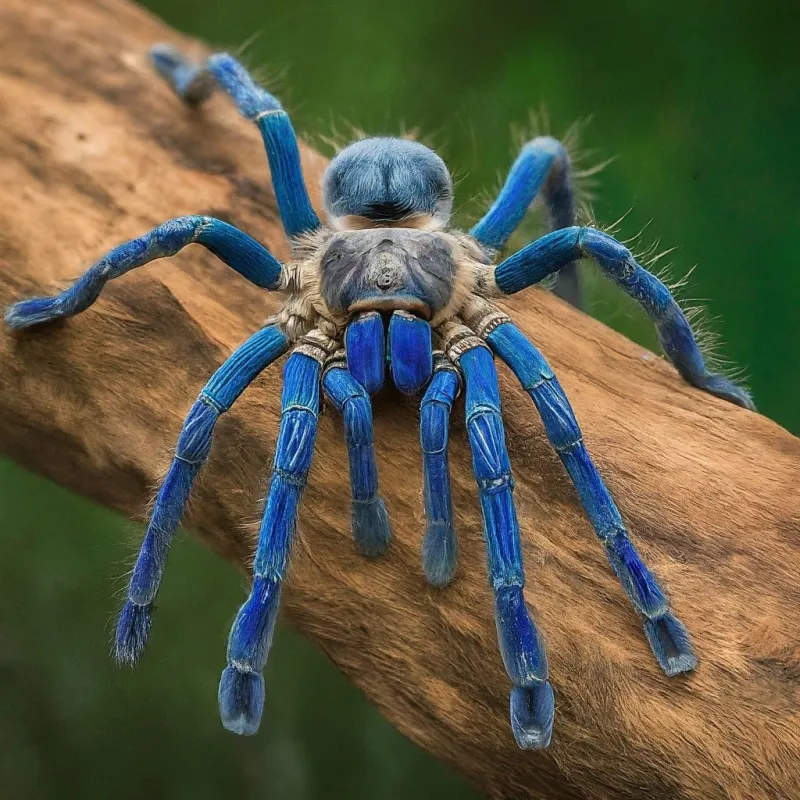
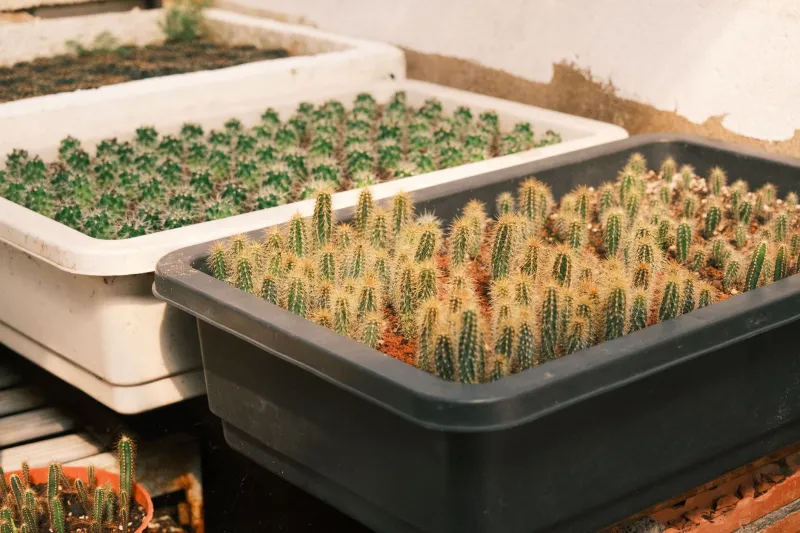
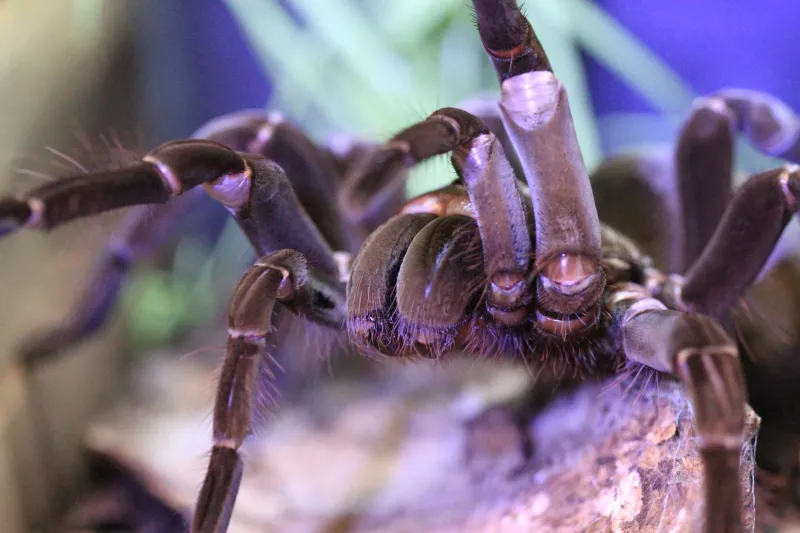
Terms of Engagement: A Realistic Brief for Springtails in a Brachypelma Enclosure
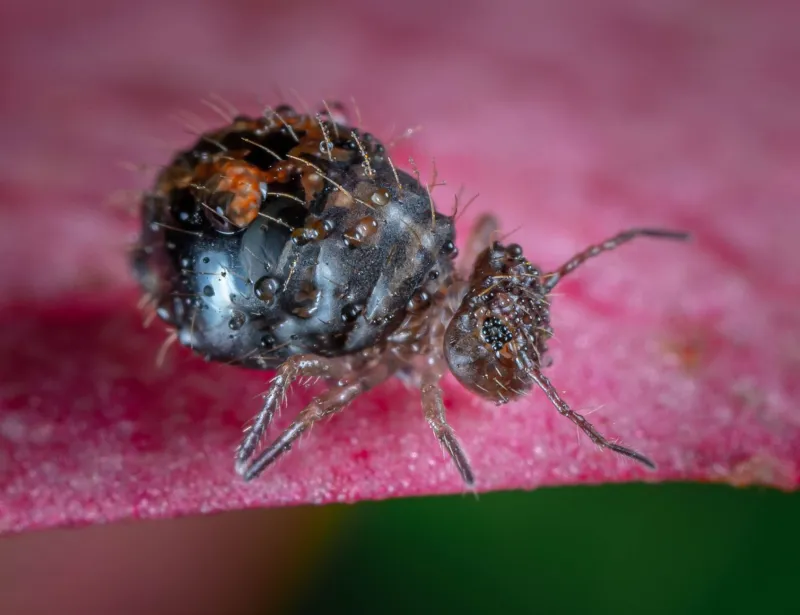
In the British tarantula hobby, 'bioactive' has become a persuasive word. A layer of springtails is often presented as insurance against mould, waste and the ordinary untidiness of a living enclosure. For Brachypelma keepers, however, the proposition deserves closer reading. Many species in the genus are kept under relatively dry conditions, and the clean-up crew has its own requirements. The relationship is less a guarantee than a contract with defined terms, limited liability and a clear expiry date if conditions change.
What the clean-up crew actually processes
Springtails, the small hexapods known as Collembola, are detritivores. They graze on moulds, algae, bacterial films and decaying organic matter. In a suitably moist substrate they can reduce the visible spread of fungal growth and break down fine faecal material and small food remnants. They do not remove urate deposits, large prey remains, buried waste or the carcasses of feeder insects that have been dragged out of sight. They are not a sanitation service with unlimited scope.
Their population is governed by moisture, food and space. In a dry enclosure they will decline; in an enclosure kept wet enough to sustain them, the keeper may be exceeding the tolerance of a Brachypelma species adapted to drier microhabitats. This tension is the central clause of the contract. The crew cannot be asked to solve a problem that the enclosure design has created.
The British flat problem
A typical UK flat in winter is centrally heated, draughty in places and low in ambient relative humidity. Substrate surfaces dry quickly, especially in enclosures with the ventilation that tarantula husbandry rightly demands. A bioactive layer requires a damp lower stratum and a moisture gradient. Many Brachypelma setups are deliberately shallow and dry at the surface. The two designs can coexist, but only in a considered arrangement: a moist corner, a deeper substrate pocket or a separate culture area that does not compromise the spider's dry retreat.
British tap water, hard in many regions, may leave mineral deposits as it evaporates. That is a secondary consideration, but it reinforces the need to observe the substrate rather than assume that a spray bottle and a springtail culture constitute a complete system. In small enclosures, the spider's digging and regular disturbance can crush a fragile population. In large enclosures, the keeper may over-water to keep the crew alive. Neither outcome is desirable.
Where the contract breaks down
Springtails can become prey. They are small enough that a tarantula may ingest them incidentally, and this is not generally regarded as harmful. The greater risk is population collapse: a colony that disappears after a moult or a dry spell leaves the keeper with the appearance of a bioactive setup but none of its function. Water dishes may also collect springtails, and large numbers climbing the walls can be a visual nuisance rather than a health crisis.
Mould control is the most over-sold clause. Springtails graze mould, but they do not eliminate it when the underlying conditions favour fungal growth. Mould is a symptom. Ventilation, moisture management and the removal of decaying material are the treatment. Some moulds are harmless; others may be allergenic or indicate persistently stagnant conditions. A clean-up crew is not a diagnostic tool and should not be used to postpone a review of the enclosure's airflow.
Isopods: a different set of terms
Isopods are larger, hungrier and more disruptive. Some species burrow extensively, require a deeper and consistently moist substrate, and may compete with the spider for space or food. Anecdotal reports of isopods investigating a moulting tarantula are not a reason for panic, but they are a reason for caution. Introducing isopods into a Brachypelma enclosure should be treated as a separate decision, not as an upgrade to a springtail culture. The two are not interchangeable, and the risks are not equivalent.
A decision framework for 2026
Before introducing any clean-up crew, the keeper should answer four questions. First, what species is being kept, and what moisture regime does it genuinely require? A Brachypelma kept dry should not be forced into a damp bioactive system for the sake of fashion. Second, can the enclosure sustain a moisture gradient without exceeding that regime? If not, the contract is void from the outset. Third, is the keeper willing to continue spot-cleaning? A clean-up crew supplements routine husbandry; it does not replace it. Fourth, is there a reliable, pest-free source of springtails, and can the population be monitored without disturbing the spider excessively?
A partial approach is often more honest than a fully bioactive claim. Springtails in a moist corner, with a dry retreat maintained for the spider, can provide limited mould grazing without turning the whole enclosure into a damp terrarium. A separate culture, used to seed enclosures as needed, gives the keeper control. Isopods should be reserved for enclosures and species where their requirements are well understood, and introduced only after a quarantine period.
Contract review
The contract should be reviewed quarterly. If springtails disappear, the first response is to check humidity, ventilation and substrate condition, not to add more livestock. If mould persists, the first response is to increase airflow and remove waste, not to assume the crew has failed. The clean-up crew is a tenant, not a contractor with liability. The primary obligation remains between keeper and spider: correct parameters, close observation and ordinary spot-cleaning.
In 2026, the sensible position for UK Brachypelma keepers is cautious. Bioactive arrangements can be a useful adjunct for some species and some households, but they are not a default and they are not a shortcut. Read the terms before signing.