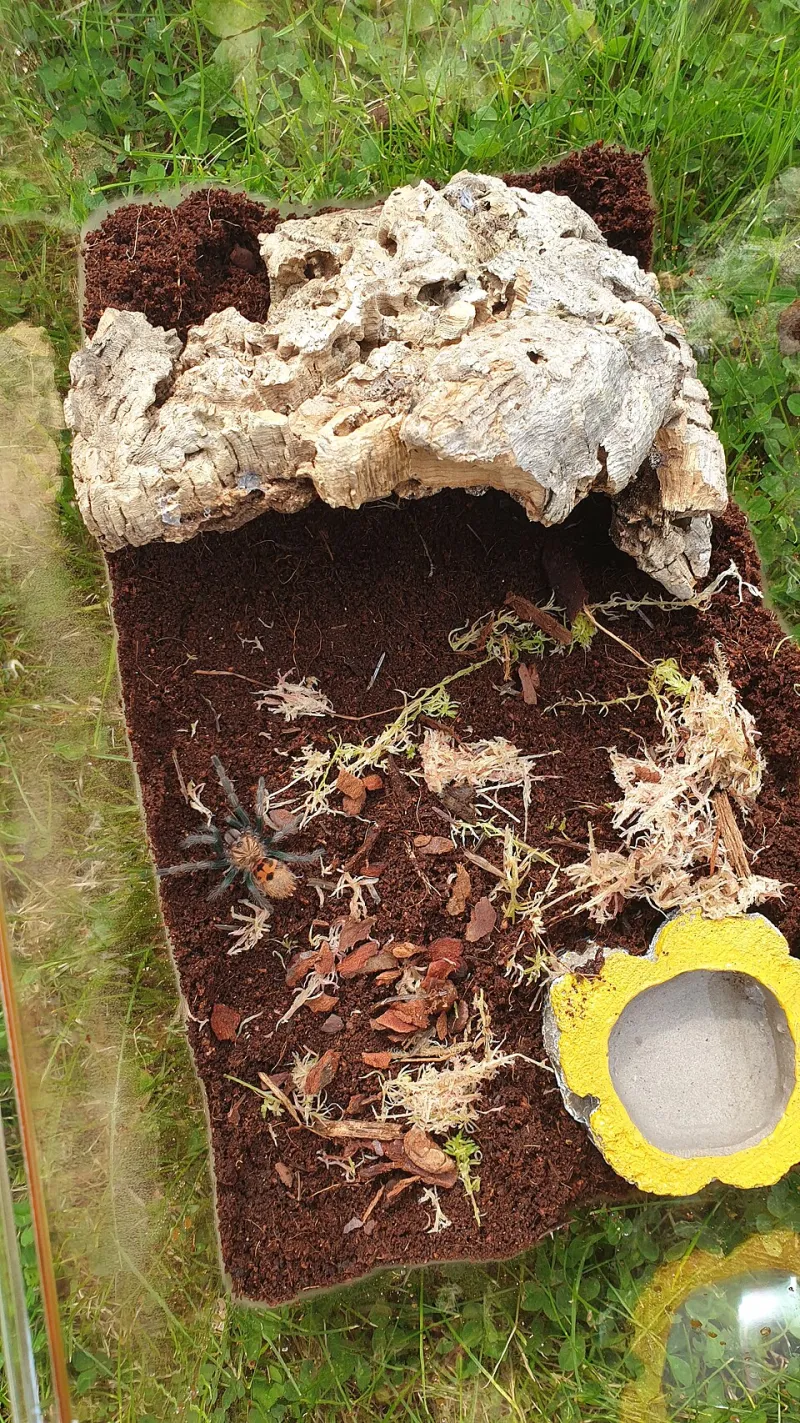
Setae at Home: A Health Plan for the Household That Shares Your Spider Room
There is a familiar joke in British tarantula keeping: the keeper who scratches an arm for three days after a rehouse and shrugs it off as part of the job. It is a harmless joke until the scratching is happening to somebody who never agreed to keep spiders — a partner, a flatmate, a visiting parent, a child in the next room. The discomfort is not imaginary and it is not confined to the person who opened the lid.
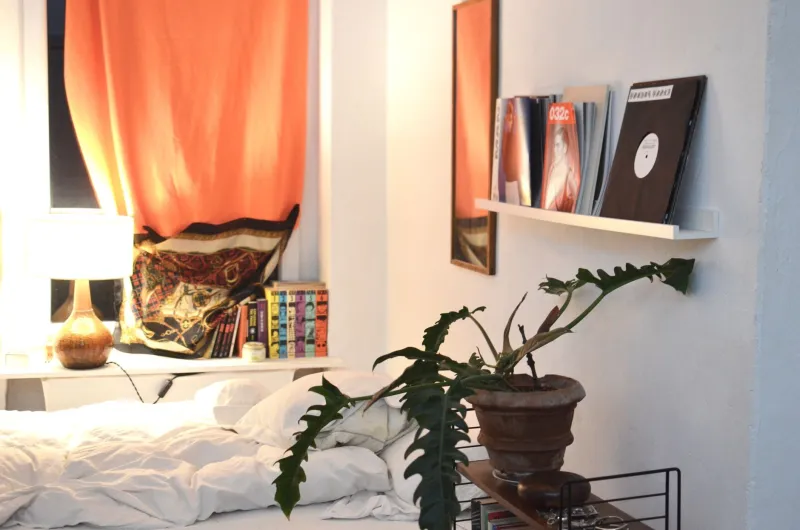
This article treats urticating setae as a household health question rather than a rite of passage. It is written for keepers in rented flats and shared houses as much as for those with a dedicated spider room, because the exposure pathway in a small British home is short: a shelf in a bedroom, a laundry airer two feet away, a duvet that never quite gets washed at 60°C.
What Is Actually Being Released
Brachypelma species carry Type III urticating setae on the abdomen — short, barbed hairs with a structure closer to a harpoon than a needle. They are not venomous. The irritation is mechanical, with a probable protein component that the immune system may recognise. When a spider kicks, it flicks a cloud of these hairs backwards with the hind legs, and the smaller fraction drifts in room air for longer than most keepers expect.
The practical consequences of that aerodynamics are unglamorous. Setae settle on curtains, cushions, carpet pile, clothing and bedding. They lodge in upholstery and resist casual vacuuming. They are picked up on hands and sleeves and then transferred to the face, and from there to the eye — the single most important exposure route to take seriously.
Why Reactions Can Escalate
Repeated exposure to a foreign protein tends to produce a stronger response over time rather than a weaker one. Keepers who report that a kick barely troubled them in their first year and now produces a raised, itching rash are describing a pattern consistent with sensitisation, even if the hobby literature on this is largely anecdotal.
The clinical evidence base is thin and should be described honestly: case reports and small series, not large cohort studies. Dermatitis, rhinitis, sneezing fits and cough are commonly described. There are documented cases of asthma-like symptoms in people with pre-existing airway disease, and ophthalmology journals carry reports of tarantula-hair keratitis — inflammation of the cornea following hairs introduced to the eye, typically after touching the face with contaminated hands.
That last point deserves emphasis. Most keepers who end up in an eye clinic did not do anything exotic. They rubbed an eye.
Eyes: The One Exposure That Is Never Minor
A foreign body sensation, redness, watering or photophobia after handling a spider, cleaning an enclosure or handling a shed skin should not be self-treated with a bit of kitchen roll and hope. Do not rub. Do not attempt to remove anything with a cotton bud. Irrigate with sterile saline if you have it and attend an optometrist or urgent eye care service the same day, and say plainly that you keep tarantulas and that barbed hairs may be involved. Clinicians cannot find what they are not told about.
Airway and Skin in a Shared Home
For a household with an asthmatic member, enclosure placement is a respiratory decision, not an aesthetic one. Bedrooms are the worst place for a kicking species: eight hours of close proximity to settling hairs, every night. If a spare room exists, use it; if it does not, place the enclosure as far as possible from pillow-height air and from where clothing is stored.
Skin reactions typically appear as itchy papules on the forearms, neck and face. Antihistamines from a pharmacist are reasonable for mild skin and nasal symptoms; a spreading rash, wheeze or chest tightness warrants a GP appointment and a note in the patient record.
A Household Risk Plan
Placement. Keep enclosures out of the direct path of a fan, radiator draught or open window draught that carries air across the room. Avoid siting a spider shelf beside a laundry airer, ironing board or soft-furnished seating where a person sits for long periods. A wipe-clean surface beneath the enclosure is easier to manage than carpet.
Ventilation. Extract air from the room rather than pushing it around it. A small extractor fan running on a timer during maintenance sessions does more good than any amount of air freshener.
Cleaning. Never dry-brush a shelf or dry-vacuum at close range with a standard vacuum. Use a HEPA-filtered machine, damp-wipe surfaces, and dispose of substrate in a tied bag rather than tipping it into an open bin. Handle shed skins with tweezers, not fingers, and store them in a sealed sleeve or wallet — not loose on a shelf above a bed.
Hands and clothing. Wash hands after every interaction, and note the long-standing hobby advice to start with cool water, since hot water opens pores. Change out of the fleece you wore during a rehouse before sitting on the sofa.
The household briefing. Any non-keeper living with the collection should know three things: what a kicked cloud looks like, that hands go nowhere near the face afterwards, and that eye symptoms mean a same-day appointment.
What to Say to a Clinician
A short script is more useful than an explanation. Something like: I keep a tarantula. Tarantulas of this genus flick barbed hairs from the abdomen when disturbed; these are not venomous but cause mechanical irritation to skin, airway and eye. Exposure occurred on this date, by this route.
For a pharmacist, that framing supports a sensible antihistamine recommendation. For a GP, it invites a note in the record and, where relevant, an asthma review. For an optician, it changes the examination.
The Point of the Exercise
Nobody is suggesting that Brachypelma keeping is a hazardous activity on any reasonable reading of the risks. It is not. But the risk is not distributed evenly across a household, and the keeper is not the person most likely to be affected. A little forethought about where the enclosure sits, how the shelf is cleaned and what the other people in the building know is the difference between a specialist hobby and a recurring domestic grievance.