Instruments Under Suspicion: A Quarterly Audit of Brachypelma Room Readings
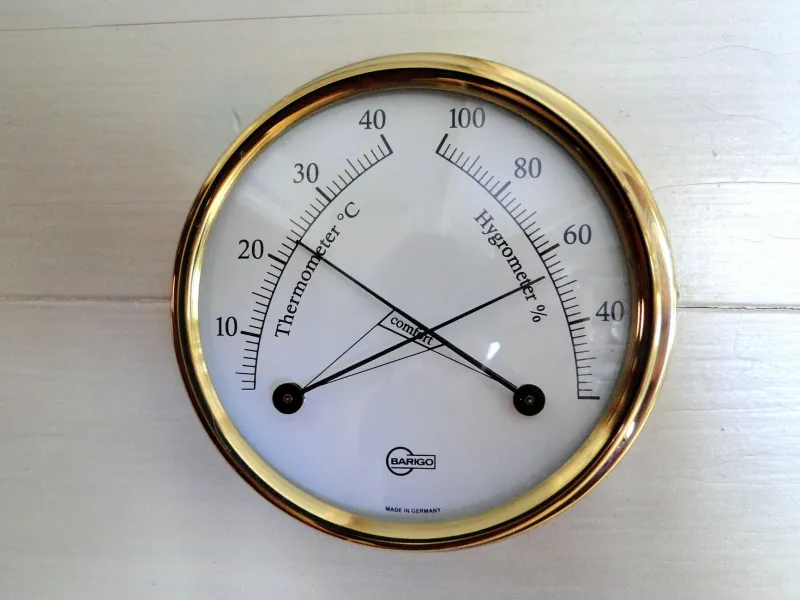
A hygrometer is not a witness. It is an instrument, and instruments drift. In a Brachypelma room, where a few percentage points of relative humidity can influence misting decisions, ventilation, and confidence during a moult, that distinction matters. The reading on a inexpensive digital display is often treated as a fact about the enclosure. More often, it is a fact about the sensor, its battery, and where somebody placed it.
The argument here is not that keepers should abandon hygrometers. It is that they should audit them. A quarterly routine of salt calibration and placement review is cheap, takes less than an hour, and prevents a familiar sequence of errors: a meter reads low, the keeper mists more, ventilation is reduced to hold moisture, condensation appears, and the enclosure becomes wetter than intended. The reverse is equally possible. A meter reads comfortably high while the actual air is drier, and the keeper mistakes a stale number for good husbandry.
Why one number deserves scepticism
Consumer hygrometers vary considerably in sensor quality, response time, and stability. Many are accurate enough for a general impression but not for fine control. They may respond slowly to changes, read differently after a battery change, or drift after months in a warm room. A display that has never been checked is best treated as a rough indicator, not a reference standard.
Placement compounds the problem. A meter clipped to the front glass of a terrarium may read the air near the glass rather than the air around the spider. A unit beside a heat source will run warm and dry. One resting on damp substrate may read local humidity that has little to do with the upper part of the enclosure. In a room with radiators, double glazing, and doors that open and close, conditions are not uniform. A single reading cannot describe them all.
The salt calibration: a controlled reference
The salt test is a practical way to check a hygrometer without specialist equipment. The principle is simple: a saturated solution of pure sodium chloride in a sealed container produces a stable relative humidity of approximately 75% at normal room temperature. If the hygrometer does not read close to that figure after equilibration, its error can be measured and recorded.
Materials are modest: an airtight plastic tub, a small open dish, pure table salt without additives, distilled or reverse-osmosis water, a thermometer, and a notebook. The salt should be moistened until it resembles damp sand, not dissolved into a shallow puddle. Place the dish in the tub, put the hygrometer beside it but not in the salt, and seal the lid. Allow six to eight hours, or overnight, for the air to equilibrate. Read the display without opening the tub.
At roughly 20°C, a sound hygrometer should sit near 75% relative humidity. Small temperature differences alter the reference value slightly, so record the room temperature alongside the result. If the instrument is adjustable, follow its instructions and bring it into line. If it is not, make a correction card: for example, reads 68% when reference is 75%, add 7 percentage points. The card should sit with the enclosure records, not in a drawer.
A single salt check is useful; two consecutive checks are better. Repeat the procedure after a week to confirm that the error is stable. An instrument that swings wildly between checks is not a calibration problem but a reliability problem, and replacement is the sensible course.
Temperature deserves its own check
Temperature sensors are usually more stable than humidity sensors, but they are not immune to error. A simple ice-point check can be made with crushed ice and a little water in an insulated cup. After stirring, the slurry sits close to 0°C. Compare the thermometer reading and note any offset. This is a crude check, but it is sufficient to catch a thermometer that is several degrees out.
More important than absolute accuracy is consistency between instruments. If two thermometers in the same room disagree by three degrees, at least one is wrong or badly placed. That disagreement should be resolved before either reading is used to make husbandry decisions.
A placement audit, room by room
The next stage is to examine where each instrument sits. The aim is not to find one perfect position but to understand the different microclimates in the room and within each enclosure. A useful method is to use one recently calibrated reference meter and move it between positions for short periods, recording readings at enclosure level, shelf level, floor level, and near external walls.
In British homes, winter conditions are particularly variable. A shelf beside an external wall may run cooler than the centre of the room. A position above a radiator may be warmer and drier than the air at floor level. Double glazing can create a cool zone near the glass, while a closed door may reduce air movement in a small room. Summer brings the opposite problem: south-facing windows and warm afternoons can produce local hot spots that a central room reading will not reveal.
Within the enclosure, the sensor should be placed where the keeper actually wants information. For most Brachypelma setups, that means mid-height, shaded, away from the water dish, and not directly in the path of misting. It should not touch the substrate or sit against a heat source. If the enclosure has a gradient, one meter cannot describe it. Either accept that limitation or use additional instruments and label them clearly.
What poor data does to husbandry
Inaccurate readings do not merely create untidy records. They change decisions. A falsely low humidity reading may prompt unnecessary misting, which can lead to saturated substrate and stagnant air. A falsely high reading may encourage a keeper to reduce ventilation or delay a needed adjustment. During pre-moult, when keepers are often most watchful, false confidence is especially unhelpful.
The remedy is not to chase a single percentage point. It is to use calibrated instruments, sensible placement, and trends over time. A reading that moves gradually over a day is more informative than a momentary number. A record of morning and evening checks, taken in the same positions, is more useful than a scatter of readings from different places.
A quarterly routine for the Brachypelma room
A practical schedule is to audit instruments in January, April, July, and October. Each audit should include a battery check, a salt calibration, a temperature check, and a placement review. The results belong in the same notebook or spreadsheet as moult and feeding records. Note the date, the instrument, the reference value, the displayed value, and the correction applied.
Between audits, keep the routine simple. Check that sensors have not been moved, that cables are not damaged, and that displays are legible. Replace batteries before they fail rather than after. Retire any instrument that shows erratic behaviour, physical damage, or a drift of more than ten percentage points after adjustment. A cheap hygrometer that has been checked is more trustworthy than an expensive one that has not.
The broader point is that husbandry should rest on observed conditions, not on the authority of a plastic case. A quarterly calibration habit will not make a Brachypelma room perfect. It will, however, make the numbers beside the terrarium mean something.